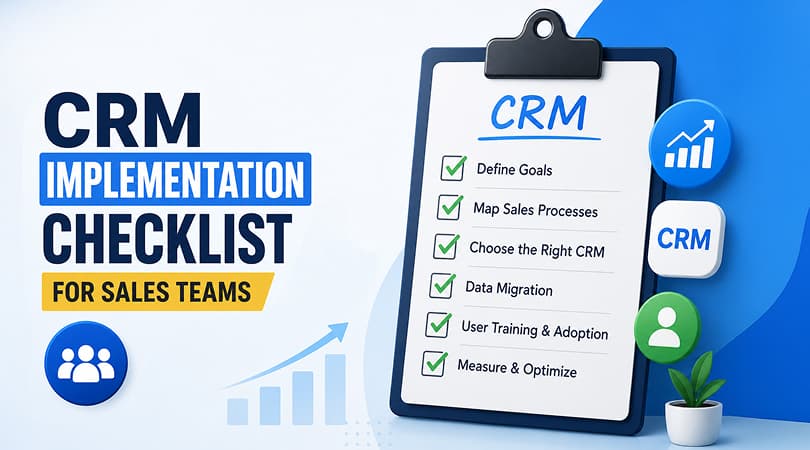
Organisations that are implementing a CRM experience up to a 29% boost in sales, but almost 63% of CRM deployments fall short. The difference between success and failure almost always comes down to one thing: preparation. Only as powerful as the plan behind it is a CRM system. In the absence of a clear implementation roadmap, a sales team gets a tool that no one uses, data they can't trust, and a process they can't follow. The result? Lost budgets, disillusioned reps and unmet goals. Whether you're doing this yourself or with a CRM implementation partner, this step-by-step checklist is tailored for the Sales team so you can ensure your system is live, your team is onboarded, and your pipeline keeps moving.
Why Sales Teams Need a CRM Implementation Plan
Implementing a CRM without any direction is like giving your sales team a brand-new car without gas, a driver's manual, and a GPS. You have the tool, but you don't know how to use it effectively.
The importance of having a structured plan:
Team alignment: However, before the CRM is rolled out, sales, management, and operations need to be aligned on the use of the CRM. If not aligned, it means that the data will be entered inconsistently, some values will be left blank, and the reports will not match.
Faster adoption: Involvement and training during the setup phase mean faster CRM adoption for teams. On the other hand, a team that has been "dumped" with a CRM without preparation is reluctant to accept it. This is why many companies hire a CRM implementation consultant to ensure alignment in the early stages, so they don't end up having to configure a single field.
Get clean data from the start: When you have a plan, you audit and clean your existing data ahead of migrating it. After all, garbage in, garbage out – and there is nothing worse than losing the trust of your CRM due to inaccurate contact data.
Measurable ROI: With goals in place up front, you can assess the value the CRM is providing, instead of making an educated guess six months after the fact. This is particularly relevant when assessing the cost of implementing CRM with respect to business results.
CRM Implementation Checklist for Sales Teams
Phase 1: Pre-Implementation
This is the most important phase. Sometimes CRM projects make mistakes at this stage because people directly jump into setup and launch.
Identify Goals: Identify what you are looking to do with the CRM, whether it be improved visibility of your pipeline, tracking of follow-ups, or the shortened sales cycle.
Engage Stakeholders: From the outset, ask for feedback from sales/marketing, managers and the IT team.
Document the Sales Process: Capture the entire sales journey from generating leads to closing the sale.
Clean Data: Organise and identify data to be migrated from other systems, removing duplicates and outdated data.
Pick the right CRM: Consider your team size and business requirements when choosing a CRM.
Assign timeline & budget: Develop a sensible plan for implementation, training & support.
Phase 2: During Implementation
Customise CRM Settings: Make sure pipeline stages, fields, and workflows are configured as per the actual sales process.
Manage Data Migration and Integrations: Migrate data carefully and integrate the CRM with email, calendar, marketing and support systems.
Document Usage Rules: Clearly document mandatory fields, Lead Management process, and Opportunity Definitions to ensure that all users are following the same process.
Team Training and CRM Champion: Have live training sessions and designate a CRM champion to support and advise the team on this.
Phase 3: Post Go-Live
Monitor Adoption: Keep an eye on login activity, data quality and pipeline updates for the first 30 days. Don't wait to address low usage.
Gather Feedback and Make Improvements: Collect feedback from users and quickly resolve any issues that arise.
Ensure Data Quality: Run periodic data quality audits to scrub duplicate data, missing information and stale data.
Define Success: Check off your initial objectives and see how the CRM is working for you.
Continuously Optimise: CRM implementation is a continuous process. Improve the system on a regular basis according to the feedback and usage of the team.
Common CRM Implementation Mistakes to Avoid
Even with the best planning, CRM implementation can fail if common mistakes are overlooked.
Making the Set-Up Unnecessarily Complex: More fields/pipeline stages/automations make the system more complicated. It can cause overload on the team and make it difficult to get it adopted. Use a basic system and then increase as necessary.
Ignoring Sales Team Input: Getting input from users who will be using the CRM every day is important. Without sales reps being part of the decision-making process, they may not be receptive to the new system.
Migrating 'Dirty' Data: Importing duplicate, old or incomplete data into the new CRM is a big no-no. By cleaning the data prior to migration, you can help resolve future problems with reporting and productivity.
Ignoring the Importance of Expert Guidance: Many businesses do not hire consultants or implementation partners because it is a costly endeavour. But it is often much more costly to correct a substandard setup or adoption later.
Viewing the Launch as the Final Step: The implementation of the CRM is not the end of the project. If not monitored, user feedback, and continuous improvements are not made, the adoption can decrease over time, reducing the value and impact of the system overall.
Conclusion
A CRM is a great weapon for the sales team, but it can only be that way if it is planned and strategically used. Every step of the process is handled with a structured approach, from preparation to launch, adoption and beyond.
The formula for success is to establish clear objectives, engage the team early in the process, make it practical, and consider the CRM launch as a start, not a finish. A well-planned implementation process results in enhanced adoption and sales performance, regardless of whether it is done in-house or with the help of a CRM implementation specialist.
When choosing to begin a CRM implementation, the initial thing you ought to do is outline your company objectives and sketch out your existing sales process. This is the groundwork for the implementation process to be successful.